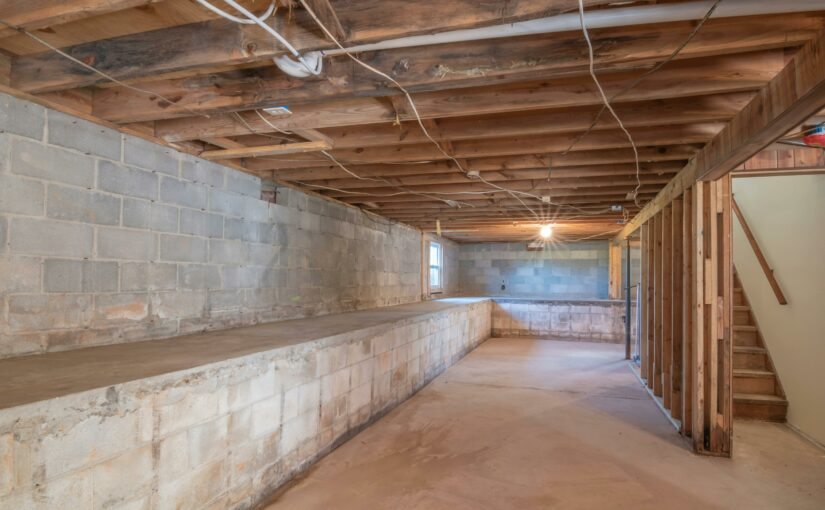
You’ve staged the living room. The kitchen has been freshly painted. The backyard looks its best. And then the home inspector opens the basement door and spends forty-five minutes down there while everyone else waits upstairs in silence. That’s not an accident. The basement is where experienced buyers, inspectors, and appraisers look when they want to understand what a home is really worth — and what it’s hiding.
Understanding what they’re looking for, and why, gives you something most sellers and homeowners don’t have: the ability to see your home the way the market sees it. That perspective is worth a great deal, whether you’re planning to sell in five years or five months.
What a Home Inspector Is Actually Looking For
A home inspector’s job is to find problems — not to scare you, but to give a buyer accurate information about what they’re purchasing. In the basement, they’re systematically working through a checklist that experienced inspectors could complete with their eyes closed, because the same issues appear over and over in the same places.
Water staining on walls and floors. White efflorescence on concrete. Cracks in the foundation — and critically, their direction, width, and whether they show signs of movement or water infiltration. The condition of the sump pump, whether a battery backup exists, and when the pump was last serviced. The state of the visible framing and any signs of rot or mold at the base of wood members. The age and condition of the water heater and any mechanicals in the space.
Each finding goes into a report. Each report goes to the buyer. And each significant finding either becomes a price negotiation, a repair demand, or a reason to walk away. The basement section of a home inspection report is consistently where the most consequential findings appear — not because inspectors spend more time there, but because that’s where the problems tend to be.
How Appraisers Think About Basement Space
An appraiser’s job is different from an inspector’s — they’re not looking for problems, they’re establishing value. And the way they treat basement space has specific rules that most homeowners don’t fully understand.
Above-grade finished square footage and below-grade finished square footage are not valued equally. In most appraisal methodologies, finished basement space contributes to value — sometimes significantly — but at a lower per-square-foot rate than the floors above grade. This isn’t arbitrary. It reflects market reality: most buyers will pay more for a bedroom on the second floor than for the same-sized room below grade, and appraisals are anchored to what comparable properties have actually sold for.
What does move the appraisal needle in a basement is functionality and condition. A finished basement with a legal bedroom — one with a properly sized egress window meeting local building code — is appraised differently than a finished room with a window that doesn’t meet egress requirements. A basement bathroom adds measurable value. A wet bar or kitchenette adds value in markets where that’s a common feature. A basement that is visibly dry, professionally waterproofed, and in good structural condition comes in higher than an identical layout with evidence of past or present moisture issues.
The professionals atAquatech Waterproofing in Mississauga work on both remediation and new waterproofing installations — and the consistent pattern they see is that homeowners who address moisture before listing get better appraisals, fewer inspection flags, and smoother transactions than those who hope the issue goes unnoticed. It rarely does.
The Three Things That Kill Deals in the Basement
After inspection reports, buyer feedback, and real estate transaction patterns, three basement issues surface most consistently as deal-breakers or value-reducers.
Active water infiltration is the most serious. A basement with visible water staining, efflorescence, active seepage, or standing water after rain is a documented problem that buyers can’t ignore and lenders sometimes won’t finance. Even a buyer who is willing to accept the risk will price it into their offer — often at two to three times the actual cost of the repair, because they’re pricing in uncertainty, not just the known fix.
Mold is the second. Visible mold in a basement — on framing, drywall, insulation, or concrete — triggers mandatory disclosure requirements in most jurisdictions, specialist remediation costs, and significant buyer anxiety that’s difficult to neutralize even after the work is done. A professional mold remediation report helps, but the fact of prior mold remains in the disclosure documents and affects perception.
Structural foundation concerns are the third. Horizontal cracks, bowing walls, or evidence of significant differential settlement are issues that home inspectors flag prominently and that buyers take seriously. Unlike water infiltration — which can be addressed with a drainage system — structural movement requires structural engineering solutions that are both more complex and more expensive to explain and document.
What Buyers Actually Want in a Basement
Beyond avoiding problems, buyers in most markets have a clear picture of what they’re hoping to find when they go downstairs — and understanding that picture helps you prioritize where to invest.
Dry and clean is the baseline expectation, and it’s the one that most significantly affects whether a buyer feels good or uneasy about the home overall. A basement that smells clean, has no water staining, and shows evidence of proper maintenance creates immediate confidence that carries into every other part of the viewing.
Usable space is the next expectation. Buyers are doing mental arithmetic when they walk through a home — calculating where everything goes, how the family fits, what flexibility exists. A basement that reads as genuinely usable square footage — even if it’s unfinished — contributes positively to that math. One that reads as a problem area subtracts from it.
Finished space with a clear purpose commands the strongest reaction. A defined home office, a guest suite with its own bathroom, a family room that’s clearly been enjoyed — these spaces give buyers something concrete to imagine themselves using, which is one of the most powerful drivers of purchase decisions and offer prices.
The Pre-Sale Investment That Pays Itself Back
The math on pre-sale basement investment is more favorable than most homeowners assume. A waterproofing system that costs several thousand dollars eliminates inspection flags that typically result in buyer credits worth two to three times that amount. Addressing visible mold before listing costs less than the remediation a buyer will demand post-inspection — and avoids the disclosure complications that come with documented mold findings.
Finishing a basement properly before sale — with real insulation, quality flooring, and appropriate lighting — adds appraised value that exceeds the renovation cost in most markets, particularly when the space is designed with a specific use in mind rather than as a generic open room.
The homeowners who get the strongest results in this market are the ones who treat the basement not as an afterthought to the listing but as a key part of the value proposition. Buyers go downstairs. Inspectors spend time there. Appraisers factor it into their numbers. The basement is doing more work in your home’s sale than most people give it credit for — and it rewards the attention you give it before the sign goes up.